Full time Housekeeper
A full-time housekeeper plays an important role in maintaining order, cleanliness and organisation within a private household. Many families rely on a dedicated professional to ensure that daily routines run smoothly and that the home remains consistently well maintained.
For households considering hiring a full-time housekeeper — or for those exploring a career in housekeeping — understanding the scope of the role is essential. In this article, we explain typical duties, working structures and what employers should consider when hiring a full-time housekeeper.

A professional full-time housekeeper preparing a luxury bedroom in a private residence.
What does a full-time housekeeper do?
Housekeepers have long been an important part of many private households. A full-time housekeeper helps ensure that a home remains clean, organised and well maintained on a daily basis.
Housekeepers work in many types of homes, from family residences to large estates. While cleaning and housekeeping tasks form the core of the role, many housekeepers also take on additional responsibilities depending on the needs of the household.
Typical duties of a full-time housekeeper
The duties of a housekeeper will vary based on their employer’s needs. Ideally, duties and responsibilities should be agreed early in the recruitment process. By fully understanding the responsibilities, both employers and housekeepers can set clear expectations, and ensure that the household runs as efficiently as possible.
Typical housekeeper duties generally include:
Cleaning duties and maintenance
- Vacuuming
- Mopping floors
- Dusting
- Cleaning kitchen surfaces and appliances
- Emptying bins and disposing of waste.
- Cleaning Bathrooms and wet rooms
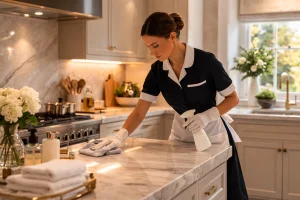
A full-time housekeeper cleaning kitchen surfaces in a luxury private household.
Weekly chores
A housekeeper may focus on vacuuming carpets and upholstery, cleaning mirrors, and polishing wooden furniture and similar on a weekly basis. Other deep-cleaning tasks for kitchen appliances like ovens and fridges are also typically done weekly.
Monthly chores
Monthly chores may involve cleaning hidden areas, such as behind and underneath furniture. Cupboards and storage areas may be cleared out and cleaned, air filters checked and replaced if applicable, and minor repairs like fixing loose door handles or changing light bulbs may be carried out.
Laundry and linen care
Laundry and caring for bed linens, clothes and curtains is another area of responsibility. On a daily basis, the housekeeper may organise and wash clothes, folding and putting away laundry as needed. Weekly tasks can include ironing clothes and linens, changing bed linens, towels and other frequently used textiles. As a matter of fact, on a 6 month basis, the housekeeper may manage seasonal wardrobes, storing away out-of-season clothing and deep-cleaning items like curtains, rugs and upholstery.

A professional housekeeper organising household linens in a private residence.
Pet care
For households with pets, the housekeeper’s responsibilities often extend to animal care. Daily tasks may include feeding the pets and ensuring they have fresh water, as well as walking dogs or providing other forms of exercise. Weekly grooming tasks may involve brushing or bathing pets and cleaning their living areas, such as cages or beds. Monthly responsibilities could include scheduling and attending vet appointments and reviewing and replenishing pet supplies, such as food and medication.
Cooking
A housekeeper cook may be responsible for preparing certain meals, along with washing dishes and maintaining kitchen cleanliness. Weekly responsibilities can involve planning a menu in consultation with the household and shopping for groceries based on this plan.
Childcare and elderly care
In households where childcare or elderly care is required, the housekeeper’s role can expand significantly. A nanny housekeeper is a specialised housekeeping professional with the skills required to care for children alongside their household duties. Similarly a carer housekeeper has the skills and experience to care for elderly.
Specialised tasks
In addition to the basic responsibilities, a full-time housekeeper may also be entrusted with specialised tasks that go beyond the routine. These tasks depend on the specific needs of the household and can add an extra layer of comfort and organisation to daily life.
- Holiday prep – helping decorate
- Travel assistance – packing and unpacking luggage
- Events – Serving drinks for example or setting the table
- Errands
- Personal assistance – paying bills for example
Skills of a full-time housekeeper
Aside from having previous experience, a good full time housekeeper will hold a range of soft skills:
- Professionalism
- Communication skills: clear communication with employers ensures that tasks are completed to satisfaction and any issues are promptly addressed.
- Attention to detail
- Time management and multitasking
- Discretion
- Flexibility
- Common sense
In the short video below, Sara Vestin Rahmani explains the qualities that make a truly exceptional housekeeper in a private household.
Legal and ethical considerations
When employing a full-time housekeeper, it’s important to consider legal and ethical aspects such as a housekeeper employment contract, workers’ rights, and health and safety regulations.
Employment contracts
A written housekeeper employment agreement is strongly recommended when hiring household staff. The contract should clearly outline working hours, salary, duties, holiday entitlement and notice periods. A clear agreement helps prevent misunderstandings and ensures both the employer and housekeeper understand their responsibilities from the start.
Working hours
The Working Time Regulations 1998 set the legal framework for working hours in the UK. For a full-time housekeeper, this generally means a limit of 48 hours of work per week, unless both parties agree to opt out of this limit in writing. Rest breaks and periods are also mandated by law.
Health and safety
Employers are obligated to ensure a safe working environment under the Health and Safety at Work Act 1974. This could involve risk assessments for tasks that involve lifting heavy objects, using potentially harmful cleaning chemicals, or operating machinery like vacuum cleaners or lawnmowers. Any necessary personal protective equipment should be provided by the employer, such as gloves for gardening.
Insurance
Employers are required to have Employers’ Liability Insurance to cover any accidents or injuries that may occur in the workplace.
Right to work
Before employing a housekeeper, you must check that they have the legal right to work in the UK. This involves verifying identification documents and, if necessary, checking immigration status.
Ethical considerations
Beyond legal obligations, ethical considerations should also be taken into account. This includes treating the housekeeper with respect and dignity, providing fair working conditions and ensuring you respect their need for a work-life balance. Discrimination based on age, gender, ethnicity, religion or any other protected characteristic is illegal under the Equality Act 2010 and should be actively avoided.
Helping you find the right housekeeper
A full-time housekeeper can play an important role in maintaining a household. Their skills and responsibilities are diverse. Furthermore, they bring value to a household by saving time and also reducing stress.
Many households choose to work with a specialist domestic staff recruitment agency when hiring a full-time housekeeper. Professional agencies can assist with defining the role, screening candidates and ensuring the right fit for the household.
If you would like to learn more about how the recruitment process works, you can explore our guide to hiring a professional housekeeper.