Housekeeping Training Courses UK
Our housekeeping training courses in the UK are designed specifically for private households rather than hotel environments.
Professional housekeeping training helps staff understand standards, routines and expectations within private homes. Courses may be delivered in person within the home environment or completed through structured online learning before practical application.
Unlike hotel housekeeping courses, private household training focuses on discretion, consistency and working within a lived-in environment where routines vary daily and expectations are personal to each household.
The programme is suitable for individuals entering domestic service as well as experienced housekeepers wishing to refine standards or progress towards senior roles.
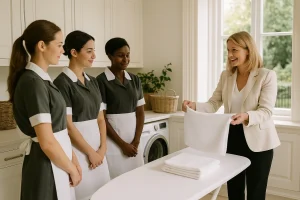
Practical housekeeping training delivered in a real home environment
Practical housekeeping training
Training is carried out within realistic domestic environments so routines can be understood in context. Areas typically covered include bedrooms, bathrooms, kitchens, laundry rooms and reception spaces.
Participants learn structured working methods, organisation systems and the level of presentation expected in private homes.
Some households and candidates begin with online learning modules before practical sessions, allowing terminology and standards to be understood in advance.
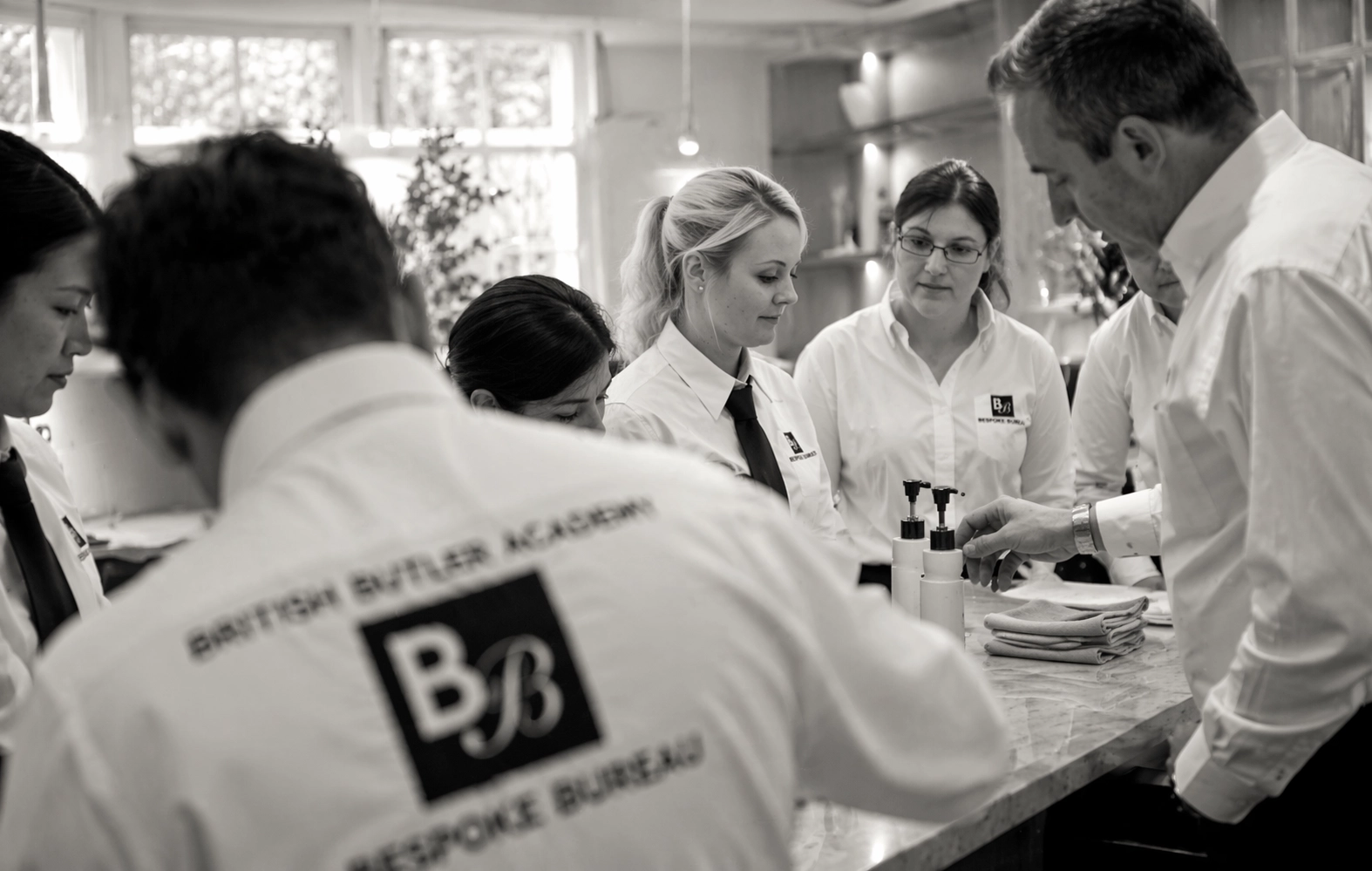
Core skills developed
Housekeeping training focuses on consistency and method rather than speed alone. Key areas include:
-
Cleaning techniques and surface care
-
Laundry and garment handling
-
Organisation and storage systems
-
Health and safety awareness
-
Communication within a household team
-
Time management and daily routines
Emphasis is placed on decision-making and judgement, as private households rarely operate using fixed commercial checklists.
Completion of training helps staff understand expectations and reduces the need for correction once employment begins.
Adapting training to the household
Training is usually adapted to the type of property and working environment. Larger homes, formal residences and modern family homes often require different routines, so practical sessions reflect the setting in which the housekeeper will work.
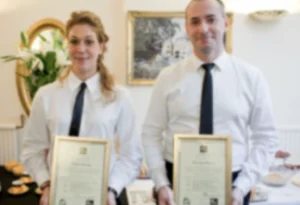
Certification awarded after completing housekeeping training
Who training is suitable for
Training may be useful for:
-
New housekeepers entering private service
-
Experienced staff refining standards
-
Senior housekeepers progressing to management roles
-
Households introducing structured systems
-
Staff relocating to the UK from overseas roles
Many households also arrange training for newly hired staff to establish standards from the beginning of employment.
Typical subjects covered
-
Bedroom and bathroom preparation
-
Care of delicate materials and antiques
-
Wardrobe organisation and fabric care
-
Turn-down service and finishing touches
-
Household logs and daily schedules
-
Professional presentation and conduct
-
Guest interaction and discretion
Developed by Sara Vestin Rahmani
The housekeeper training programmes at The British Butler Academy have been developed by Sara Vestin Rahmani, Founder of Bespoke Bureau, drawing on over two decades of experience in private household recruitment and training.
The courses are designed to reflect the real standards expected within private homes, focusing on practical skills, consistency, and long-term performance within professional household environments.
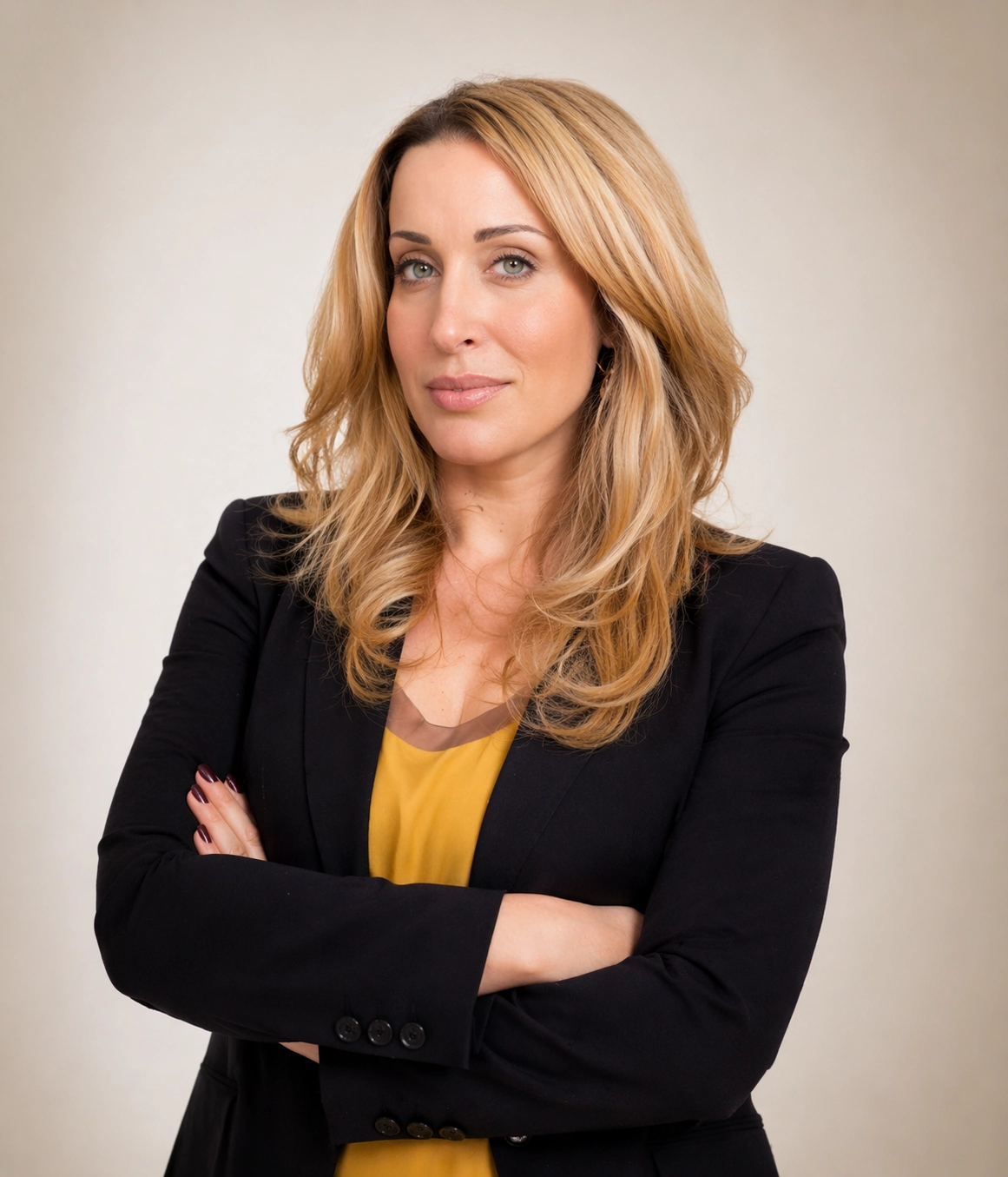
Sara Vestin Rahmani, Founder of Bespoke Bureau and The British Butler Academy, specialising in housekeeper training and private household recruitment
Health and safety awareness
Understanding safe working practices is important within private households. Training explains correct use of products, safe handling of equipment and prevention of damage to interiors and furnishings.
Why structured training matters
Clear methods help households maintain consistent standards and help staff work confidently without constant supervision. When expectations are understood in advance, working relationships tend to be more stable and long-term.
For employers, structured training significantly reduces supervision time and prevents early placement breakdowns caused by differing expectations.
Certification and standards
Housekeeping training is most effective when based on consistent methods and recognised working practices. Structured certification helps both households and staff understand expectations before employment begins.
For staff, certification demonstrates familiarity with professional routines and presentation standards. For employers, it provides reassurance that procedures and responsibilities have been taught in a structured way.
Training standards are regularly reviewed to reflect modern household environments and evolving service expectations.
Training content reflects expectations commonly found in London and international private households.
Many of the training standards taught reflect working practices commonly used in London’s private households and estates across the UK.
Typical duties of a housekeeper
Housekeepers typically manage cleaning, laundry, organisation and overall upkeep within a private household environment. Responsibilities may include care of clothing and linens, maintaining kitchens and bathrooms, preparation of guest rooms, and monitoring household supplies. In some homes, duties may also extend to light cooking, errands, pet care, receiving deliveries and coordinating with contractors or other staff members. The exact responsibilities vary depending on the size of the property and structure of the household team.
Further information
Further details about course structure and available options can be found in our UK housekeeping training courses.
Insights into professional standards within private household housekeeping
Short excerpt from The British Butler Academy training explaining how housekeepers protect valuable items within private households.