What Does a Private Chef Do? Understanding the Role in a Private Household
Hiring a private chef is no longer limited to ultra-formal households or special occasions. Today, private chefs support families, individuals, and principals who value quality, consistency, and flexibility in how meals are planned, prepared, and served.
Understanding what a private chef actually does — and how the role differs from other culinary arrangements — helps households make informed decisions when considering professional support.

What is a private chef?
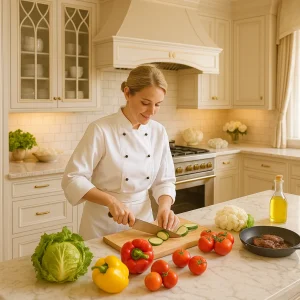
A private chef is a trained culinary professional who works exclusively for one household or principal. Unlike personal chefs, who typically cook for multiple clients on a rotating schedule a private chef focuses their time, creativity, and attention on a single household.
Private chefs often have formal culinary training and backgrounds in fine dining restaurants, luxury hotels, yachts, or private estates. Their work is shaped entirely around the household’s preferences, routines, and dietary requirements.
How a Private Chef Differs from a Personal Chef
While each role is tailored, private chefs typically manage a broad range of responsibilities, including:
- Menu planning based on preferences, dietary needs, and seasonality
- Daily meal preparation for principals, family members, and guests
- Grocery sourcing and ingredient selection
- Pantry and kitchen inventory management
- Food safety, hygiene, and compliance standards
- Coordination with household staff when required
In more formal households, private chefs may also work alongside butlers or service staff for entertaining and events.

Types of Private Chef Engagements
Private chef services can be structured in different ways depending on household routines, locations, and lifestyle requirements. While the role always centres on personalised, high-quality food preparation, the format of engagement varies widely.
Understanding the different types of private chef arrangements helps households choose a structure that feels practical, sustainable, and aligned with daily life.
Full-Time or Part-Time Private Chefs
Full-time private chefs are typically employed by households that require daily meal preparation and ongoing culinary support. They manage menu planning, food sourcing, preparation, and kitchen organisation while working closely with principals to reflect personal preferences, dietary needs, and household schedules.
Part-time private chefs may work on specific days or prepare meals in advance for later use. This option suits households seeking consistency and professional standards without the need for daily on-site support.
Seasonal and Holiday Chefs
Seasonal and holiday chefs are engaged during specific periods, such as time spent at secondary residences, on yachts, or during extended holidays. These chefs often travel with families or relocate temporarily to another property.
Their role requires adaptability, discretion, and the ability to maintain high standards in unfamiliar kitchens while accommodating guests, entertaining, and changing routines.
Short-Term or Transitional Chefs
Short-term or transitional chefs provide temporary support during periods of change, such as relocations, renovations, health recovery, or particularly demanding work schedules.
These engagements offer structure and continuity when household routines are disrupted, allowing families to maintain consistent, well-planned meals without committing to a long-term arrangement.
Occasional and Event-Based Chef Support
Some households engage private chefs on an occasional basis for dinner parties, special celebrations, or periods of increased entertaining. In these cases, the focus is on tailored menus, timing, and seamless coordination with other household or service staff.
This type of engagement allows households to enjoy professional culinary support when needed, without ongoing staffing commitments.
Catering to Individual Dietary and Lifestyle Needs
One of the greatest advantages of a private chef is their ability to cater precisely to dietary requirements and personal preferences.
Private chefs regularly work with allergies, intolerances, medical or nutritional plans, and specialist diets, adapting meals in real time without compromise.
Expectations When Hiring a Private Chef
Successful placements depend on clear expectations on both sides. Households benefit from defining working hours, scope of responsibility, privacy boundaries, and communication preferences early.
When these elements are agreed from the outset, private chef arrangements tend to be long-lasting and highly successful.
Choosing the Right Structure
The most successful private chef engagements are those that align with household expectations, schedules, and communication styles. Clear structure, defined responsibilities, and realistic planning help ensure a smooth working relationship and consistent results.
Private chef services are most effective when designed around how a household actually lives, rather than forcing routines to fit a fixed model.
 A Structured Approach to Private Chef Recruitment
Private chef roles require careful matching. Culinary skill, discretion, adaptability, and temperament are just as important as experience.
Households often choose to work with specialist agencies that understand both the practical and interpersonal demands of private service environments.
Final Thoughts
A private chef offers more than convenience. At their best, they bring structure, consistency, and enjoyment to daily life, allowing households to eat well without the pressures of planning, shopping, or preparation.
For those considering professional culinary support, exploring private chef services in London can help clarify how these roles are structured within private households.